How Hologram Illusions Work: Reflection, Projection, and Perception
Learn how floating-image illusions use reflection, projection, lighting, and viewpoint, and how those effects differ from optical holography.
Read the guideHow can an image seem to float when the light comes from an ordinary screen? Discover the reflections, viewing angles, and visual cues behind a convincing illusion.
A hologram illusion can make an image appear somewhere surprising: above a screen, inside a display, or among real objects. Its appeal comes from the apparent placement of the subject. Understanding how the light reaches your eyes makes that effect easier to explain and reproduce.
Start with the arrangement rather than the label. Locate the image source, any reflecting or receiving surface, and the intended audience position. These three details tell you what the display can show and which viewing conditions will help it succeed.
The term covers effects that create an impression of a floating or spatially present image. A reflected screen image, a staged projection, and a virtual object viewed through a headset can all attract that description. They do not necessarily share an optical mechanism.
Optical holography has a more specific meaning: the reconstruction of light wavefronts through holographic information. Keeping that distinction clear helps you compare demonstrations fairly. An illusion can be visually effective without providing all the views or depth information you might associate with a physical object.
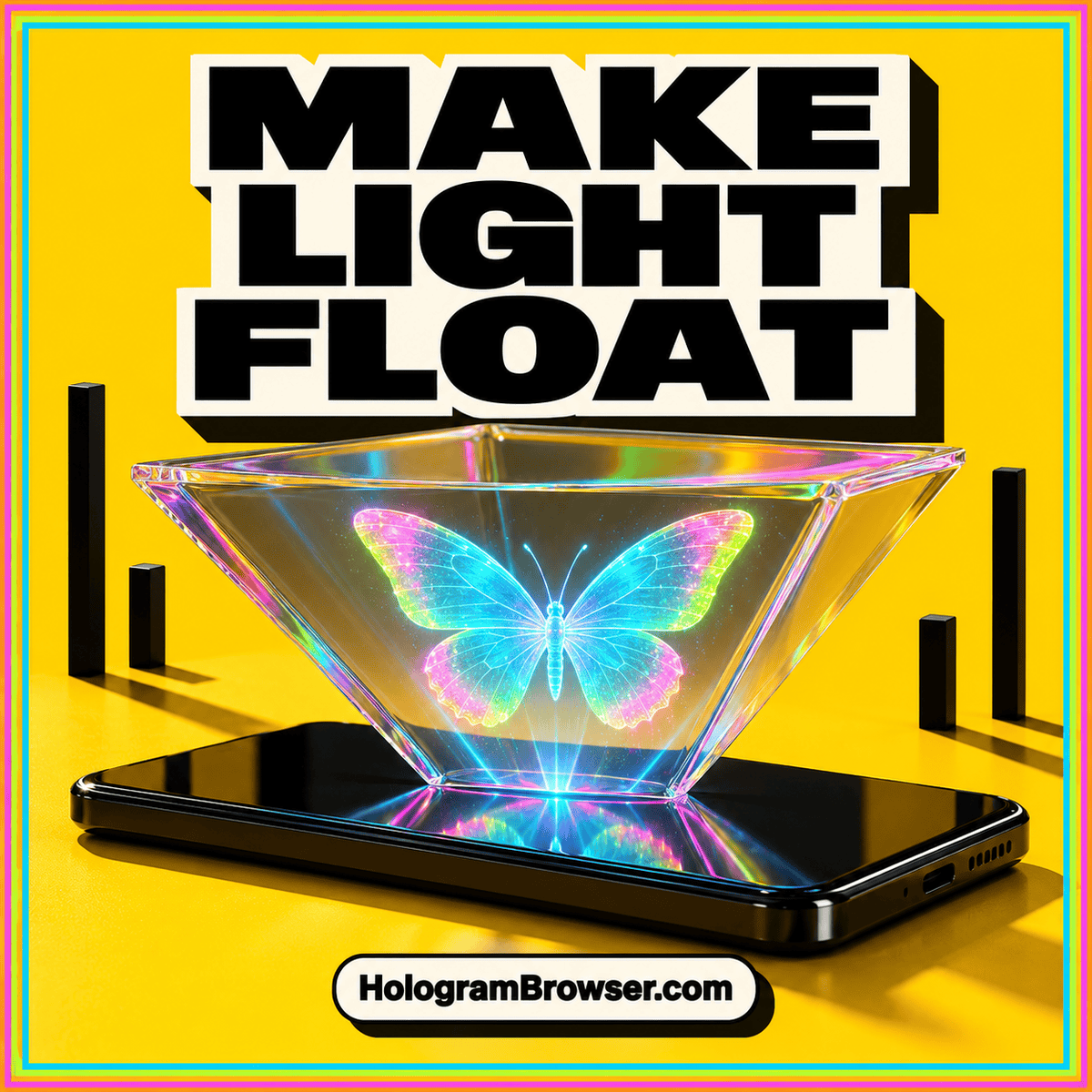
Pepper’s Ghost combines a reflected image with a scene visible through a transparent sheet. The sheet transmits light from the background while reflecting light from a separately positioned source. The viewer sees the two together, so the reflection appears to occupy a place within the scene.
A phone can provide the source for a small demonstration. Its screen faces upward, and a suitably tilted sheet sends part of that light toward a seated observer. With the background controlled, a bright shape seems to stand behind the sheet. Changing the angle changes the useful viewing direction, so placement matters as much as content.
An illusion may be designed for a narrow audience position. Move too far to the side and the image can become incomplete, reveal its surface, or disappear. Bright surroundings can also introduce reflections and reduce the separation between the intended subject and its background.
A rotating animation needs special interpretation. The video can show several sides of an object over time, while all observers still receive the same sequence. That is different from a display that supplies an appropriate new perspective when each observer moves. Ask what “three-dimensional” or “360-degree” means in the specific demonstration you are watching.
For a small reflection activity, use a bright still shape on black, a smooth piece of light clear packaging, and a stable support. Find a good viewing position before adding animation. Keep the materials simple and use their existing shapes so the exercise stays focused on observation.
Change one variable at a time. Compare dark and light backgrounds, make a small angle adjustment, or move the image within the source screen. Record what changes and what stays consistent. Those observations help separate the effects of content, lighting, and geometry, and give you better questions to ask about a larger display.
Read next: Learn how reflection, projection, and perception work together, or follow the Pepper’s Ghost home activity for a complete setup.
Further reference: Institute of Physics — Pepper’s Ghost.
Learn how floating-image illusions use reflection, projection, lighting, and viewpoint, and how those effects differ from optical holography.
Read the guideBuild a simple Pepper’s Ghost illusion with a phone, soft clear packaging, and folded cardboard, then explore reflection, viewing angles, and contrast.
Read the guideUnderstand how light-field and volumetric displays form depth, what viewers can inspect, and which content and installation tests reveal the important tradeoffs.
Read the guide